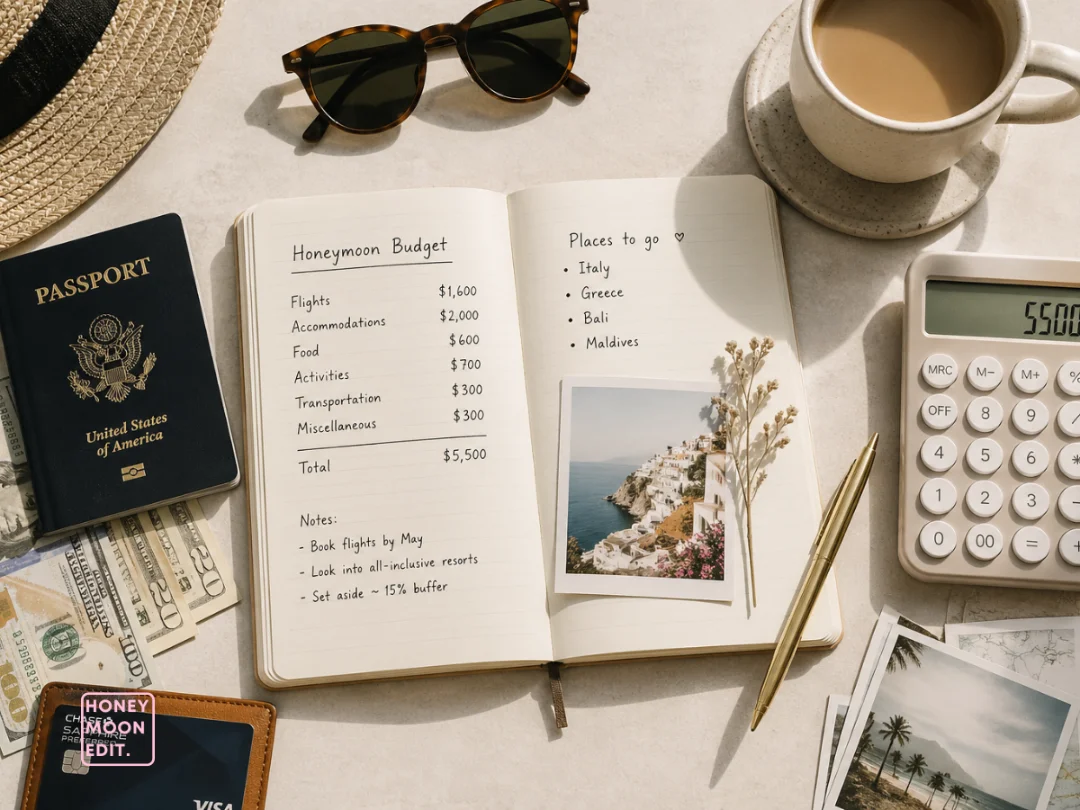
1. Set Your Honeymoon Budget First (Before You Book Anything)
Before you search flights or fall in love with a hotel, decide exactly how much you realistically able to afford. Not a rough idea—an actual number.
This is the step most couples skip, and it’s usually why budgets spiral later. Without a clear cap, every option feels justified in the moment. With one, decisions get a lot easier.
- That hotel? Either it fits your budget or it doesn’t.
- That flight upgrade? yes or no.
Think of this number as your filter. It keeps you focused, saves time, and prevents the “we’ll figure it out later” trap.
If you’re not sure what’s realistic, don’t overthink it. Pick a number that feels comfortable to save over six months—something that won’t leave you stressed before the trip even starts.
2. Break It Down: How Much to Save Each Month
Once you have your total budget, turn it into something actionable.
Divide it by six—that’s your monthly savings target.
Simple, but this is where your plan either works or falls apart. If the number feels unrealistic, adjust the total now. It’s much easier to tweak early than to scramble later.
3. Create a Simple Honeymoon Budget Breakdown
Now that you know your total and monthly savings target, give that money some structure.
You don’t need a detailed spreadsheet—just a rough split so you know where your budget is going. This helps you avoid overspending in one area (usually hotels) and scrambling later.
4. Open a Dedicated Honeymoon Fund (and Automate It)
Keep your honeymoon money separate. It sounds minor, but it makes a big difference.
When your savings sit in the same account as everyday spending, it’s easy to dip into it without noticing. A dedicated account creates a clear boundary—this money has a purpose.
Set it up simply:
- Open a separate savings account
- Name it something specific (it helps more than you’d think)
- Set up automatic transfers each week or per paycheck
Automation is the key here. Once it’s running, you’re not relying on motivation or memory—it just happens in the background.
Six months goes by quickly. This is how you make sure the money is actually there when you need it.
5. Make Small Adjustments to Free Up Money
6. Book the Big Pieces Early (Flights + Hotel First)
7. Build in a Buffer (Because Something Always Costs More)
Even the best-planned honeymoon budgets run into small surprises.
A nicer dinner you didn’t plan for. 🍝
A last-minute excursion. 🚤
Airport transfers that cost more than expected. 🚕
That’s normal.
To avoid stress later, add a 10–15% buffer to your total budget from the start. Not as an afterthought—but as part of the plan.
So if your honeymoon budget is $5,000, aim for $5,500–$5,750 instead.
This cushion does two important things:
- Keeps you from constantly recalculating while you’re traveling
- Lets you say “yes” to things without worrying about overspending
A good honeymoon shouldn’t feel tightly managed. It feels easy. A buffer is what makes that possible.
8. Track Your Progress (Without Obsessing)
At this point, your plan is set. Now it’s just about staying on track.
You don’t need to check your budget every day or track every small expense. Instead, keep it simple:
- Check your honeymoon fund once a week
- Make small adjustments if needed
- Stay consistent with your automatic transfers
If you’re slightly ahead or behind one week, it’s not a big deal. What matters is the overall trend.
This is the part most people underestimate. Not the math—but the consistency. Stay loosely aware, keep it moving, and let the system you set up do the work.
🔔 Honeymoon Edit Saving Tip
Keep the Trip in Mind
Saving for something six months away can feel abstract—especially when everyday expenses are right in front of you.
So make it tangible.
Save a photo of the kind of honeymoon you’re imagining.
A hotel room, a view, a moment—something that feels like your trip.
Set it as your phone background, or keep it somewhere visible.
It’s a small thing, but it changes how you make decisions. Skipping a random expense feels easier when you’re reminded what you’re actually working toward.
Final Thought: Keep It Simple
A honeymoon budget doesn’t need to be perfect to work.
You don’t need the absolute best flight deal or the most optimized plan. What matters is that you set a clear number, followed through, and gave yourself enough room to enjoy the trip without constantly thinking about money.
Six months is enough time to do this well—without stress, and without overcomplicating it.
Plan it simply. Save consistently. Then go and enjoy it.