A honeymoon in Hakone is less about checking sights off a list and more about slowing down together. Just a short trip from Tokyo, Hakone offers a quieter side of Japan—think warm onsen baths, beautifully prepared meals, and ryokan stays designed for rest.
If you’re planning a Japan honeymoon and want something calm, intimate, and easy to organize, Hakone is one of the best places to start. This guide covers the essentials—where to stay, what to do, and a simple Hakone itinerary—so you can focus on the experience, not the logistics.
*Some links in this post are affiliate links. If you decide to book or buy something, I may earn a tiny commission. It helps me keep creating helpful honeymoon guides. Thank you!
Why Choose Hakone for a Honeymoon?
Hakone is an easy choice if you want a calm and intimate honeymoon, and a little removed from the usual rush of travel.
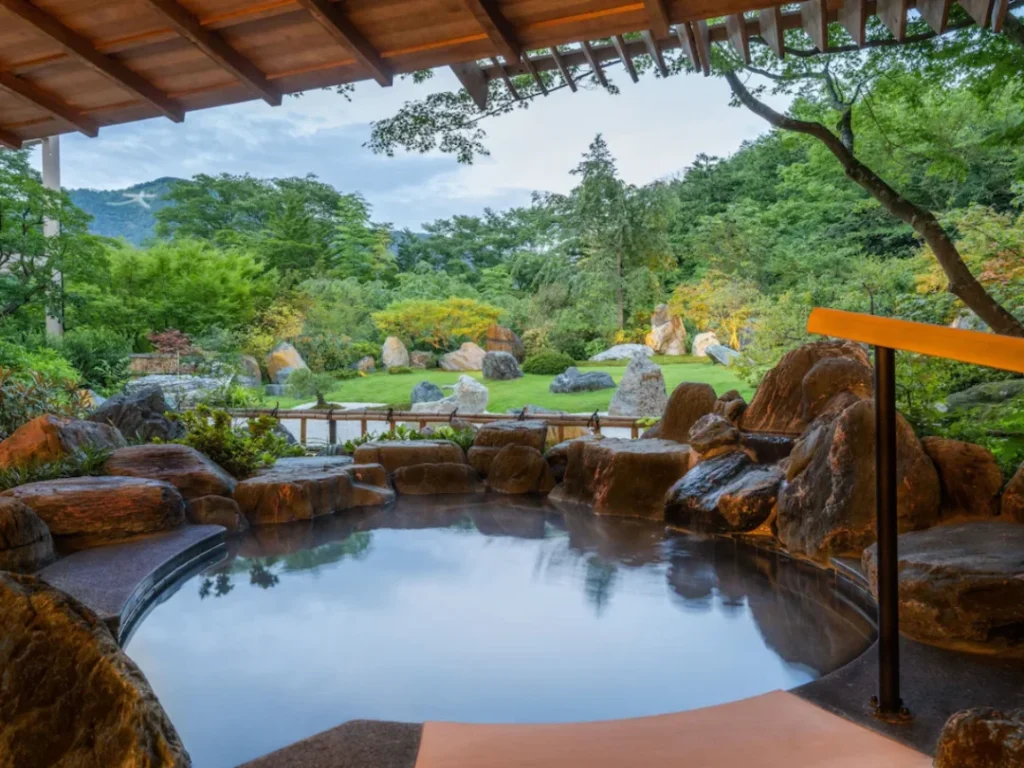
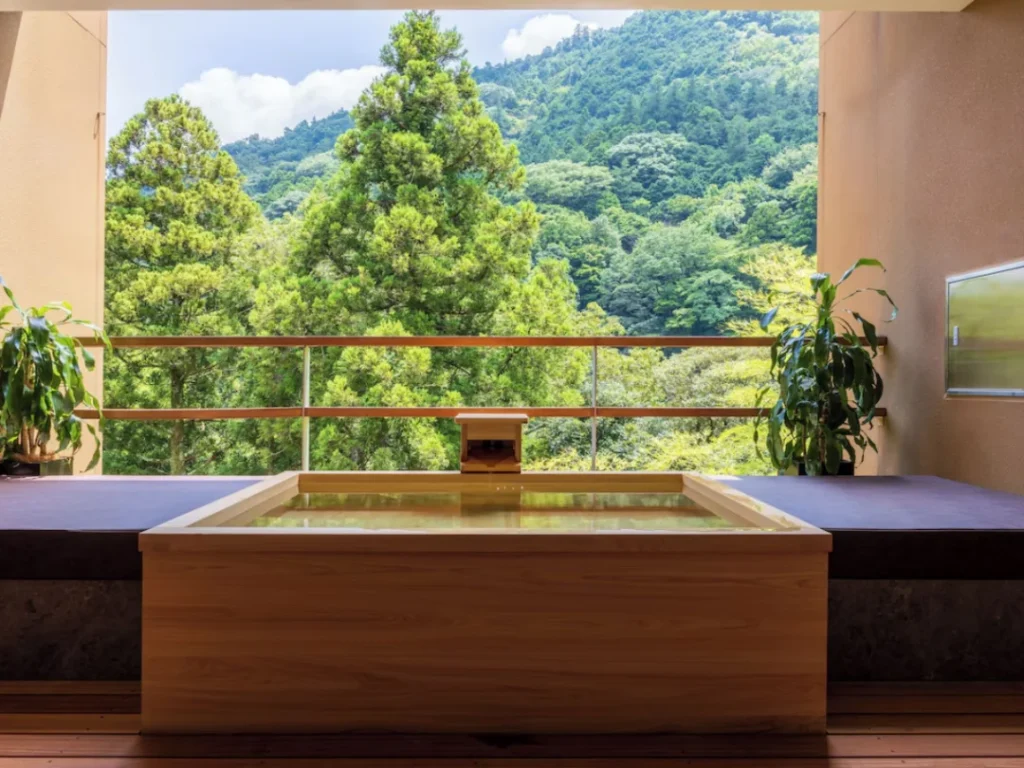
- First, it’s known for its onsen (hot spring) experience. Many ryokan offer private baths, so you can unwind together in a quiet, scenic setting—no crowds, no schedule, just time to slow down.
- It’s also incredibly convenient. From Tokyo, you can be in Hakone in about 1–2 hours, which makes it perfect for a transition from city energy to complete relaxation.
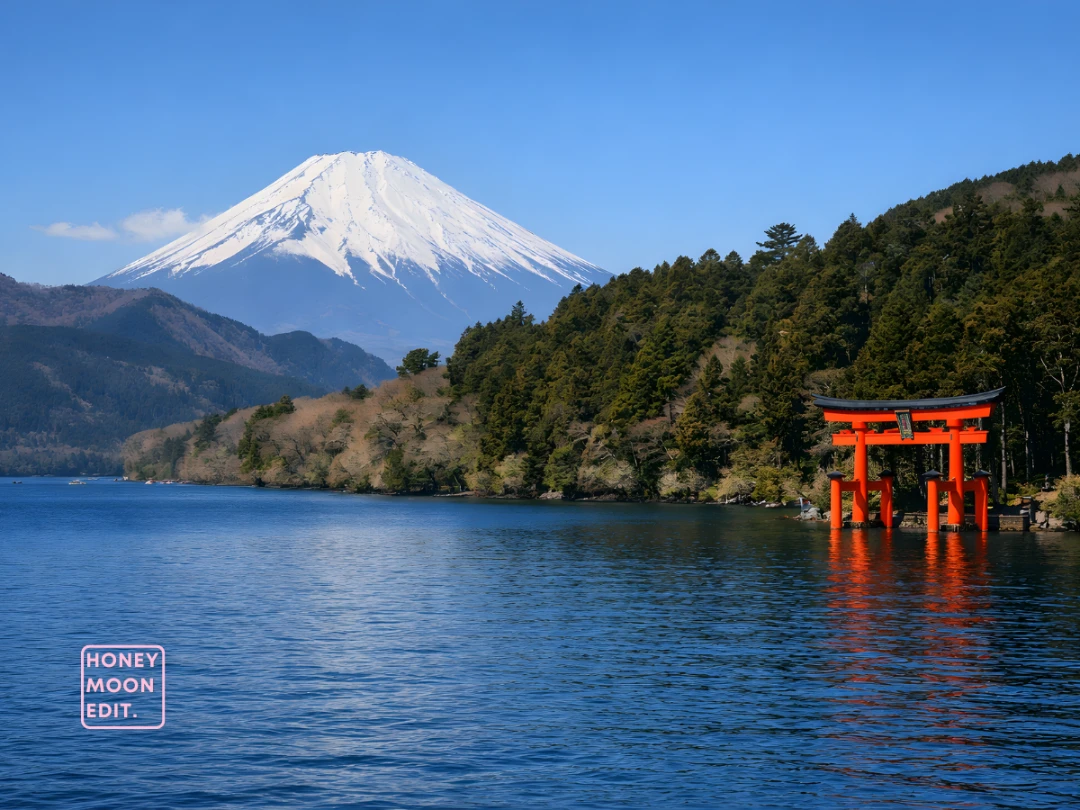
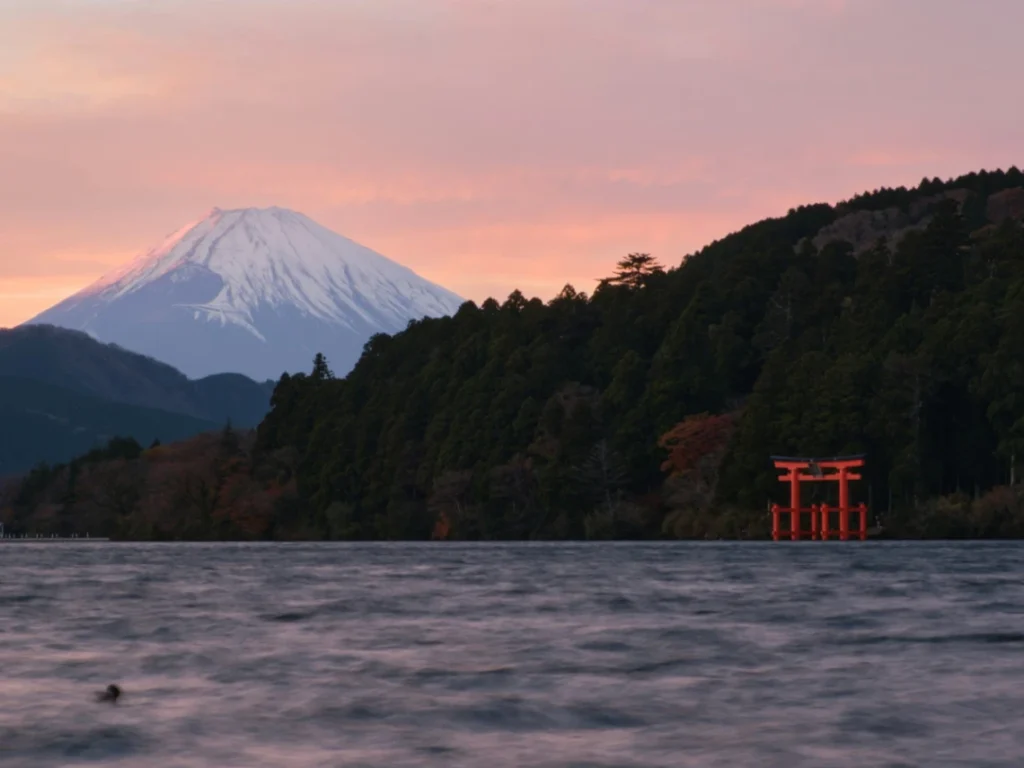
- Then there’s the setting. Lakes, mountains, and on clear days, views of Mount Fuji—Hakone is naturally romantic.
- Finally, the ryokan experience itself is what makes it stand out. Thoughtful details, multi-course kaiseki dinners, and a slower pace of life create something that feels intentional—ideal for a honeymoon.
If your idea of a perfect trip is less about doing everything and more about enjoying where you are, Hakone fits effortlessly.
Best Ryokan in Hakone for Couples
If you’re planning a honeymoon, this is where Hakone really shines. These ryokan are known for private onsen, exceptional service, and a calm, intimate atmosphere—just how you imagined traditional Japanese experience to be.
Gora Kadan
Location: Gora (easy access from Hakone-Yumoto; quiet, elevated setting)
Style & Rooms: Former imperial villa turned ultra-luxury ryokan; spacious suites with tatami living areas, some with private open-air onsen baths
Why couples love it: Minimalist elegance, long private corridors, and a very peaceful, exclusive feel
Dining: High-end kaiseki featuring seasonal ingredients
Vibe: Refined, serene, slightly modernized traditional luxury
Kinnotake Tonosawa
Location: Tonosawa (near Hakone-Yumoto, tucked in forested valley)
Style & Rooms: Adults-only ryokan with sleek, modern suites, all featuring private hot spring baths
Why couples love it: Designed specifically for couples—quiet, sensual atmosphere with lots of privacy
Dining: Creative kaiseki with modern presentation
Vibe: Contemporary, romantic, slightly moody luxury
Yamano Chaya
Location: Along a river in Tonosawa, surrounded by forest
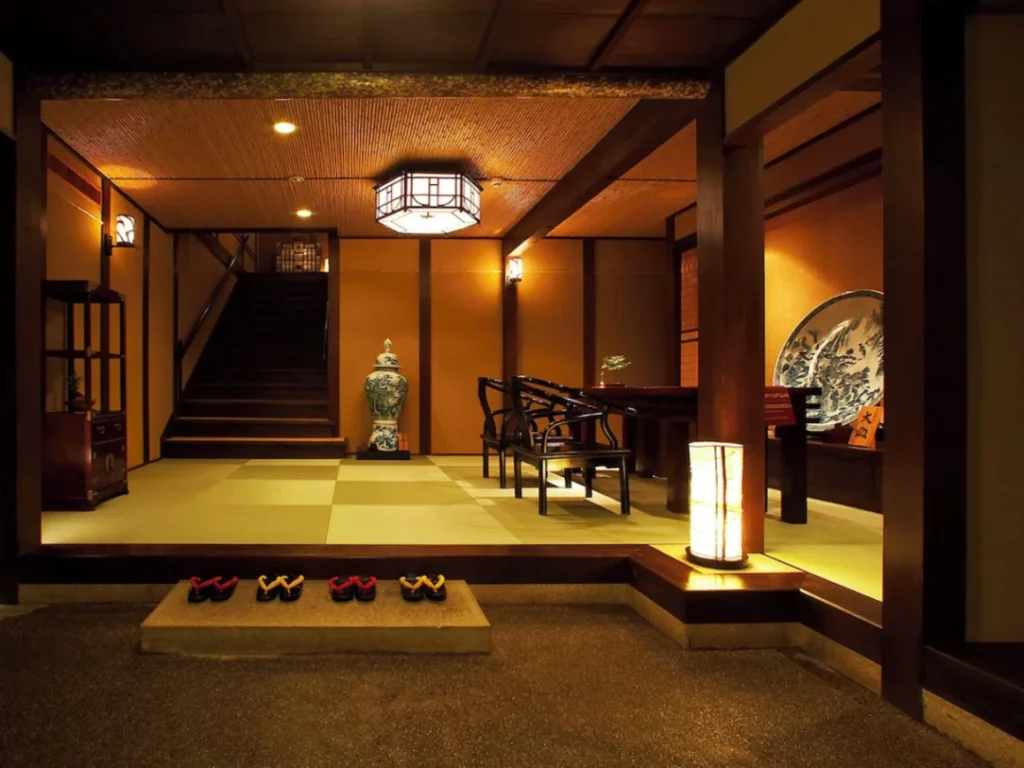
Style & Rooms: Classic ryokan with tatami rooms, sliding doors, and some private open-air baths
Why couples love it: More traditional and intimate; rooms overlook river and trees
Dining: Seasonal kaiseki served in-room
Vibe: Warm, authentic, quietly romantic
What is a Ryokan?
A ryokan is a traditional Japanese inn—simple in concept, but very thoughtful in experience and often has the following features.
Tatami rooms & futon beds
Rooms are minimal and calm, with woven tatami flooring and beds laid out in the evening.Onsen (hot spring baths)
Many ryokan in Hakone feature natural hot spring baths, sometimes private and attached to your room.Kaiseki dining
Multi-course Japanese meals, often served in-room, focusing on seasonal ingredients and beautiful presentation.Omotenashi (hospitality)
Service is quiet, attentive, and detail-oriented—everything is designed to feel calm and relaxing.A slower pace
Ryokan stays are less about sightseeing and more about resting, eating well, and enjoying the setting.
5 Things to Do in Hakone on Honeymoon
Cruise across Lake Ashi
A scenic boat ride on Lake Ashi with views of surrounding mountains—and on clear days, Mount Fuji in the distance. It’s simple, but surprisingly memorable.Ride the Hakone Ropeway
A short but dramatic ride over volcanic landscapes toward Owakudani. The views are wide and open, and it adds a bit of contrast to the otherwise slow pace.Visit Owakudani Valley
A volcanic area with steaming vents and walking paths. Try the famous black eggs (kurotamago)—a small, slightly quirky experience that’s fun to share.
Explore the Hakone Open-Air Museum
An outdoor museum blending art and nature. It’s easy to walk through, not overwhelming, and feels calm rather than crowded—ideal for a relaxed afternoon.Coffee shops and quiet stops
Small cafés and viewpoints are scattered throughout the area. No need to plan heavily—just stop when something feels right.
How to Get to Hakone from Tokyo
Getting to Hakone from Tokyo is easy, affordable and vert enjoyable.
Here are the two main ways to get to Hakone comfortably.
Odakyu Romancecar (Direct & Scenic)
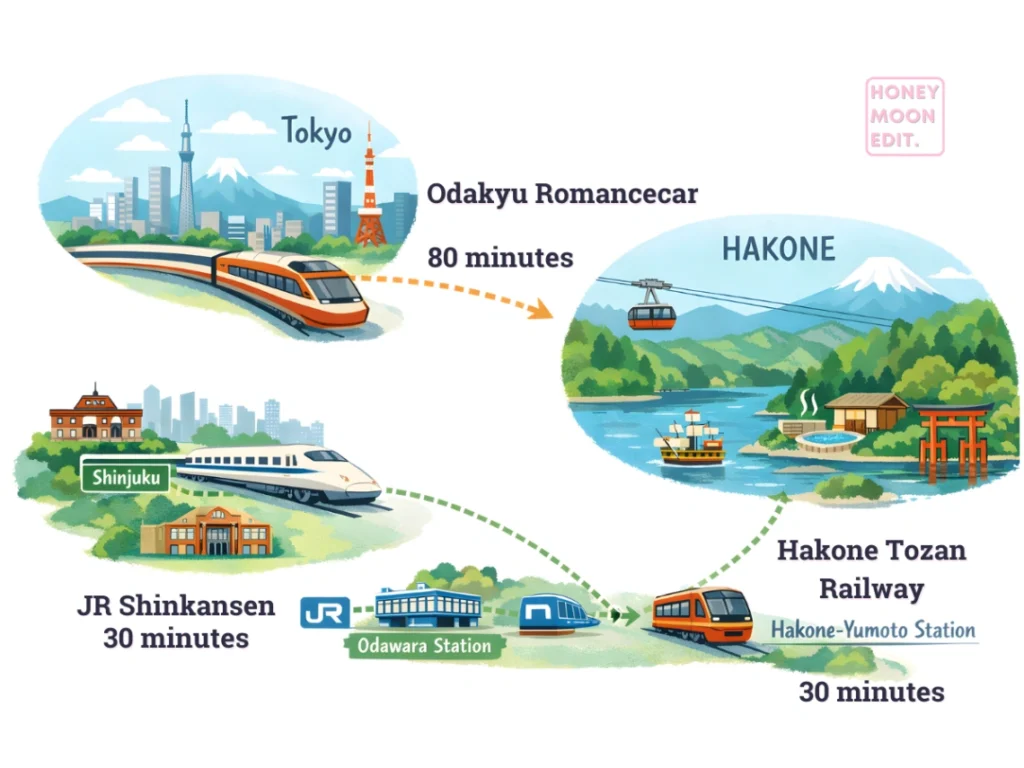
The Odakyu Romancecar runs directly from Shinjuku to Hakone-Yumoto. No transfers, comfortable seats, and large windows—this is the most straightforward and relaxed way to travel.
⏱ Travel time: about 80 minutes
💰 Costs: about JPY2470
For more info, click here (Japanese). You can buy ticket here (English).
Train; JR Shinkansen + Local Lines (Fast option)
Take the JR Shinkansen to Odawara from Tokyo or Shinagawa, then transfer to the Hakone Tozan Railway. Slightly more effort, but still smooth and reliable.
Travel time: about 60 minutes
Costs: about JPY3600
For more info/tickets, click here (Japanese) or here (English)

Best Time to Visit Hakone for Honeymoon
Hakone is a year-round destination, but the experience changes with the seasons. For a honeymoon, the best time depends on the kind of atmosphere you’re looking for.
Spring (March–May) — Vibrant and scenic
Cherry blossoms and fresh greenery make this one of the most popular times to visit. The weather is mild, and the overall feel is light and romantic. Expect higher prices and more bookings during peak bloom.Fall (October–November) — Quiet and colorful
Autumn foliage adds warm tones to the mountains and lake views. It’s calm, slightly cooler, and often considered one of the most beautiful seasons in Hakone. But it can be very busy.Winter (December–February) — Onsen season
Cooler temperatures make hot spring baths even more enjoyable. Fewer crowds and occasional views of snow-covered landscapes (and clearer chances of seeing Mount Fuji).Summer (June–August) — Lush but humid
Green and vibrant, but warmer and more humid. Still a good option if you prefer fewer crowds and don’t mind the heat.
Conclusion
A honeymoon in Hakone is simple in the best way—quiet mornings, long baths, and time that feels unhurried. It’s not about doing more, but spending quality time with your new partner.
If you’re planning a Japan honeymoon, Hakone can be easily added to both Tokyo and Kyoto stays. Even a short stay here can end up being the part you remember most.